Mum’s Traditional Seville Orange Marmalade Recipe
As January rolls around, so does marmalade-making season ~ not to be missed.
Marmalade is bound up in some of my fondest childhood memories. Sunday mornings that stretched out, unhurried consisted of endless rounds of marmalade on toast, paired with a pot of smokey earl grey tea.
And later, marmalade became a staple for my cupboards at university - for hungover tea and toast marathons whilst sat on the sofa mindlessly watching box sets.
As the New Year rolls around, bringing with it January’s slower pace, seville oranges start to appear in grocers and supermarkets. It’s marmalade-making season.
So I thought I'd share my mum's extensively tried and tested recipe for Seville orange marmalade.
The oranges you need to make marmalade with - Seville oranges, appear briefly in the shops throughout January. Their season is short so grab them while you can and use them straight away or freeze them to make marmalade later in the year.

This is my mum's traditional Seville orange marmalade recipe. Extensively tried and tested by moi.
To make around 8 jars of marmalade, you'll need:
1kg Seville oranges
2.5 litres water
2kg sugar
Juice of 1 and ½ lemons
Muslin cloth and string
9–10 sterilised jars - better to have too many than not enough
A big ol’ pan
A sugar thermometer


1 | Juice the oranges and lemons
Wash your oranges and lemons.
Slice them all in half and squeeze out all of the juice into the biggest pan you've got, removing any pips. Don’t throw the pips away, you’ll need them for the next step.
Be sure to use the biggest pan you can get your hands on. When your marmalade starts bubbling you’ll need lots of head-room for the mixture to multiply in size.

2 | Remove the pith
Remove the soft pith from the inside of the rind with a spoon, and bundle the soft pith along with any pips, and the lemon skins into a piece of cheesecloth.
Bring together all corners of your cheese cloth and use a piece of string to tie your cheesecloth at the top, creating a tightly sealed bag containing your pith, pips and lemon skins. Drop this into the pan.
3 | Shred the rind
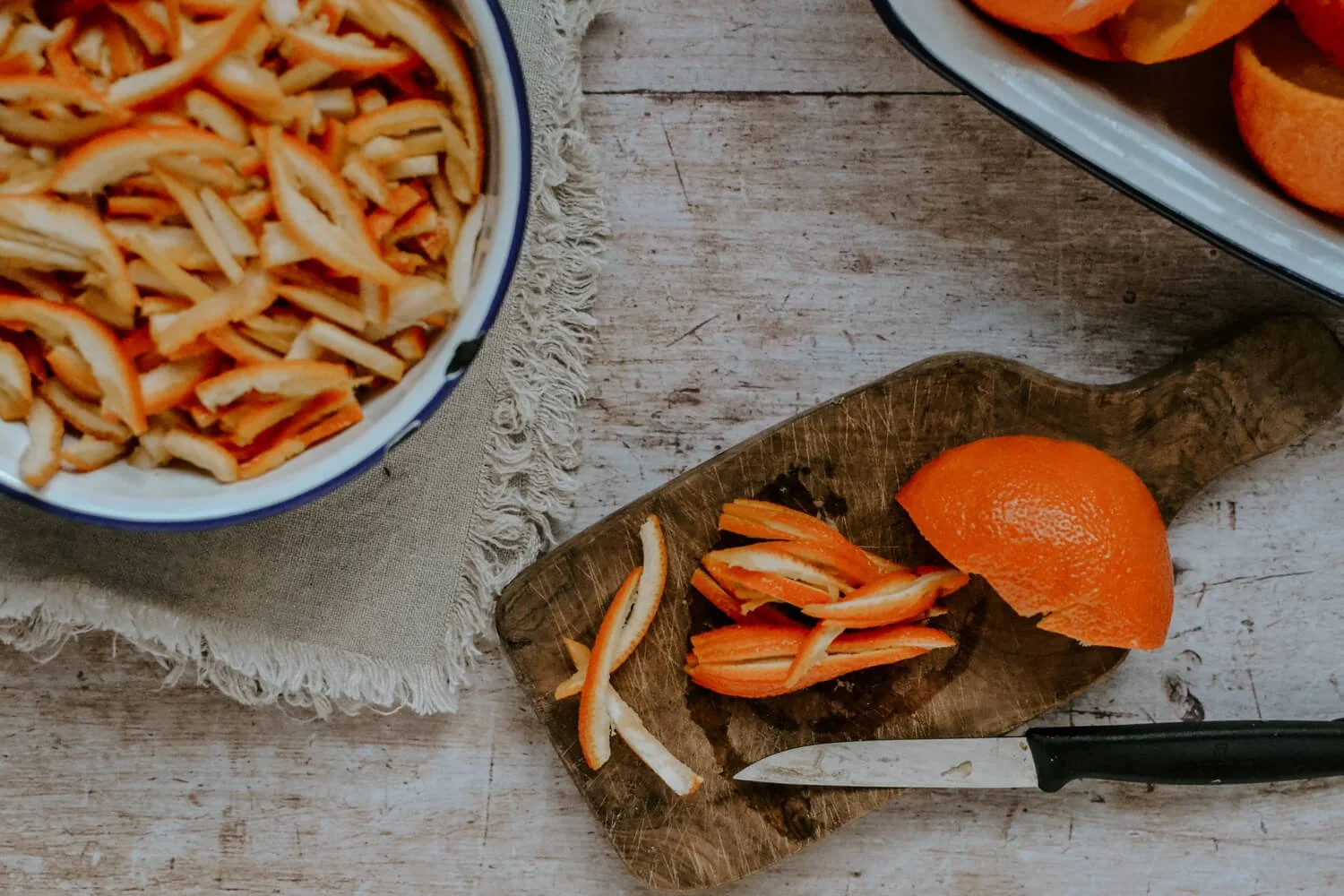
Shred the orange skins finely into thin slices using a knife, and add these to the pan.
4 | Cook
Add the water to your pan and cook gently for 2 hours, or until the rind is soft enough to eat in yur marmalade.
Squeeze all of the liquid out of your cheese cloth and remove it. Make sure you get as much juicy stuff out of your cheese cloth bag as possible, this is where the pectin can be found, which will help your marmalade set.
5 | Sterilise your jam jars
While your marmalade is simmering, you can sterilize your jars (to make sure your marmalade keeps for as long as possible).
Wash your jars with hot, soapy water.
Place the jars on a tray lined with baking paper. If you’re using Kilner or Weck jars make sure you remove the rubber parts before putting them in the oven.
Place your jars on the tray, in the oven and turn the oven on to 100 C (warm the jars up with the oven so they don't crack due to a dramatic temperature change).
Once the oven has reached 100 C leave your jars in there for 5 minutes or so, then turn the oven down to around 70 C to keep your jars warm for when you pour your marmalade into them.
6 | Turn up the heat
Add the sugar to your pan and cook on a medium heat, stirring frequently until the sugar has dissolved.
Then put your sugar thermometer into your pan and boil vigorously for about 20 minutes, until setting point is reached - about 105C.
If you don’t have a sugar thermometer you can judge when the marmalade is ready by dropping ½ a teaspoon of the marmalade onto a saucer, if it forms a wrinkly skin as it cools - it’s ready.
7 | Jar your marmalade
Pour into your warmed, sterilised jars.
Once they’ve cooled attach the lids and label them.

Finally, enjoy it smothered on thick slices of toasted farmhouse bread with a steaming cup of tea. Yum.
Making marmalade is a bit of a labour of love but it’s so worth it.

📍 Save to Pinterest for January marmalade season…